Group movement
Event and conference transport
Twelve cars and two tempo travellers across three days is not twelve bookings, it is a duty roster. What you are hiring is the person who holds it: a coordinator on the ground with the whole board in front of him, and one number to ring instead of twelve drivers.
- From
- ₹12.00a kilometre in a sedan. Every class and every charge is on the rate card.

The kinds of event we are asked to move
Different programmes with the same problem underneath them, which is more vehicles than one person can hold in their head, running to a timetable that changes on the day.
Conferences and dealer meets
Delegates landing across one whole day, a shuttle between the hotel and the hall, and a car standing by for the speaker whose flight moved.
Corporate offsites
One convoy out on Friday afternoon, the vehicles held at the resort over the weekend, and the same drivers bringing everybody back.
Exhibitions and trade fairs
Pragati Maidan and the Expo Mart at Greater Noida. The run in is short, and where the fleet stands between movements is the whole problem.
Wedding guest movement
Airport and station pick-ups spread across three days, then shuttles between the hotel and the venue at hours nobody planned for.
Convocations and college functions
Parents arriving from four districts on one morning, and the vehicles kept out of the drive until they are wanted.
Plant visits and buyer delegations
A fixed programme between a factory, an office and a hotel, where arriving ten minutes early matters more than the vehicle does.
One conference day, hour by hour
A real programme rather than a template. The hours move from event to event and the shape does not: heavy at both ends, thin in the middle, and one vehicle held back for the thing nobody put on the schedule.
- 05:40
The first airport car leaves
Two delegates on an 08:10 arrival at T3 and one on 08:35, paired onto one run because they land inside the hour of each other. The driver has the flight numbers, so he is watching the arrival board and not the clock.
- 08:15
The hotel loop opens
Three tempo travellers on a twenty four minute round trip with both porches counted, so a vehicle leaves the hotel every eight minutes. The coordinator stands at the hotel end until the hall is full.
- 10:00
The loop drops to one vehicle
Everybody who is coming is in the hall. Two of the three go out to the arrivals still landing and one stays on the loop for the delegate whose flight was delayed.
- 13:30
The standby car is used
A speaker’s return flight moves to the evening and he wants to go after lunch. The held car takes him and is back on the forecourt before the afternoon session breaks.
- 17:45
The loop reopens, heavier
Everyone leaves at once, which is the opposite of the morning. All three tempo travellers plus the two cars that have finished their airport runs, and people are counted on rather than left to find a vehicle.
- 20:30
Dinner at a second venue
A shorter loop on a different road, and it is timed again, because a nine minute run at half past eight is not the nine minute run somebody measured at six.
- 23:10
The late run
Two delegates who stayed on after dinner. One vehicle was held for exactly this and is on the sheet as held, which is why it was not released at eleven with the rest.
- 23:40
Released, and the slips signed
One duty slip per vehicle, carrying the odometer at start and at close and the hours, signed by somebody on your side. Tomorrow’s roster goes out with the drivers named.
One day of a three day conference. An arrivals day is mostly airport runs and a departure day is mostly waiting, so each gets its own sheet and its own vehicle count.
What goes on an event fleet
Delegate movement first, because that is where the vehicle count actually sits, then the cars for speakers, your own team and the airport runs.

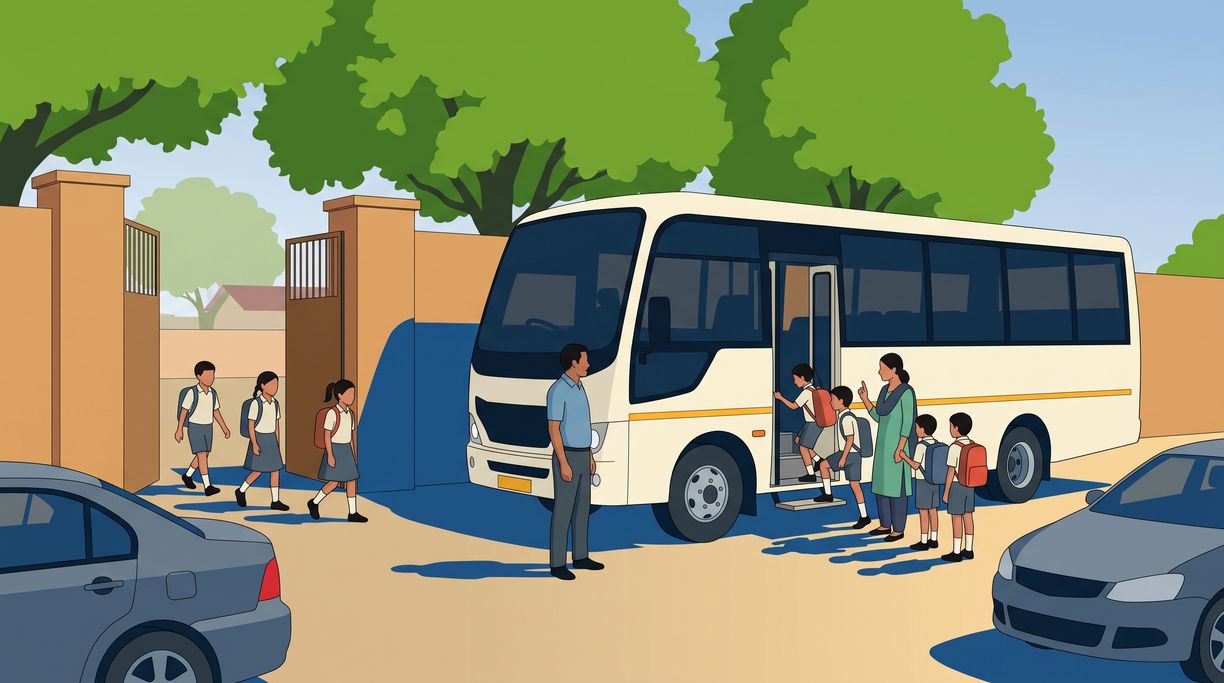
Tempo traveller
Force Traveller 12/17/25, Force Maharaja 20, Force Urbania 17, or similar
- Seats
- Up to 25
- Per km
- From ₹26.00
Mini coach
Eicher 25/27, or similar
- Seats
- Up to 27
- Per km
- From ₹35.00
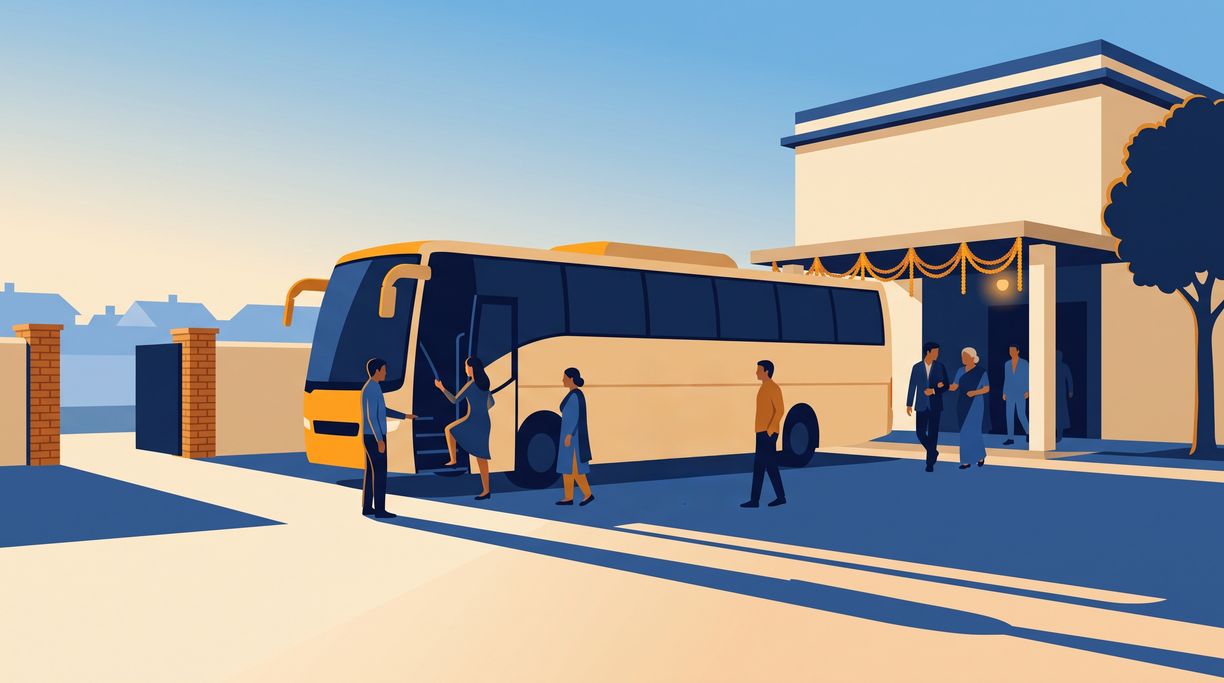
Coach
Ashok Leyland, or similar
- Seats
- 35
- Per km
- ₹45.00

Full-size MPV
Toyota Innova Crysta, or similar
- Seats
- 7
- Per km
- ₹19.00
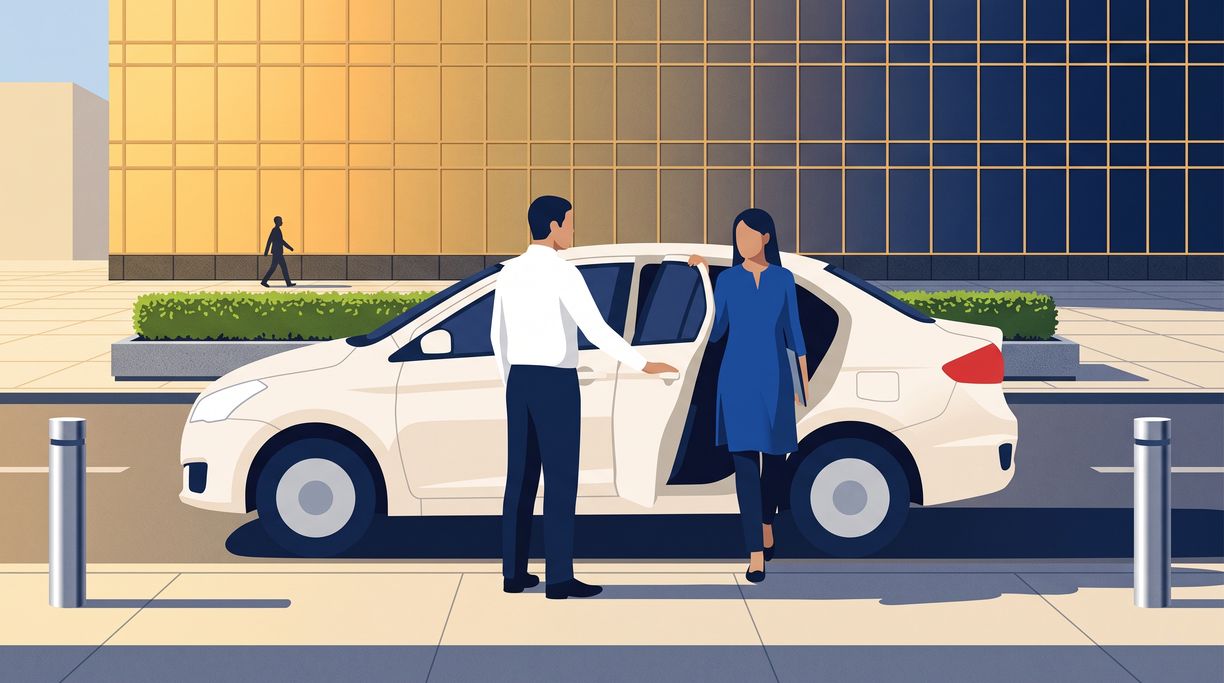
Sedan
Maruti Dzire, Honda Amaze, or similar
- Seats
- 4
- Per km
- ₹12.00


Effective . Driver allowance is charged per calendar day and is on the rate card with everything else.
What the fare covers
In the quoted fare
- Fuel and running cost
- Whatever the trip burns.
- The chauffeur
- His driving charges for the duty.
- Maintenance, insurance and air conditioning
- The vehicle is insured and serviced, and the AC runs.
- A coordinator on the ground
- One person at the venue for the run of the event, holding the board every vehicle is a row on, moving cars against it as the day slips, and answering for the fleet so your team is not ringing drivers.
- The roster built before anybody lands
- Your arrival list, session timings and departure list turned into a duty sheet per vehicle per day, and sent back to you while there is still time to change it.
- Parking sorted with the venue first
- Where the fleet stands between movements is agreed before the first car arrives, so eleven vehicles are not sitting in the porch at the moment the guests are.
Charged on top
- Kilometres beyond the quoted itinerary
- At the published per kilometre rate for the class, counted from the odometer.
- Driver allowance₹300 to ₹800 a day
- Per calendar day the car is held, including the day it comes back.
- The driver's night halt
- On a multi-day trip where there is no driver accommodation at the hotel. We tell you before the trip which it will be.
- Inter-state permit
- For a tempo traveller or a coach crossing a state line. At actuals, with the receipt on the bill.
- State entry tax
- Where the trip crosses a state border. At actuals, and named on the quotation before you confirm.
- Toll
- At actuals, and the FASTag statement is shared with the bill.
- Parking
- At actuals, with the receipt.
- GST5%
- Shown as its own line on the quotation and on the invoice.
Each vehicle is counted on its own. The package runs from when that vehicle reports to when it is released, and the kilometres are the odometer between those two, per vehicle, per day. Twelve cars on an event are twelve duty slips.
The figure on your quotation is the figure you pay. Everything payable at actuals is a named line on it, with a number against it, before you confirm. Nothing is added afterwards.
What organisers ask before they sign

What does the coordinator actually do on the day?
He holds the board. Every vehicle on the event is a row on it with its driver, its duty for that day and where it is standing right now, and he moves cars against it as the programme slips. In practice that is standing at the porch when a session breaks, sending the right tempo traveller forward, keeping the vehicles that are not wanted out of the drive, and ringing the airport car when a flight moves. Your team rings him and he rings the drivers.
How do you time a shuttle between the hotel and the venue?
Off the round trip, measured rather than guessed. Somebody drives one full loop on the actual road at the actual hour, both porches included, and that time divided by the number of vehicles on the loop is your headway. A twenty four minute round trip with three vehicles puts a car at the door every eight minutes. If you want it tighter than that it is another vehicle and not a faster driver, and we will say so in the proposal rather than on the morning.
What is a standby vehicle, and are we paying for it to sit there?
You are, and that is the point of it. A standby car is held at the venue with its driver, it is not sent on another duty, and it exists for the delegate who has to leave early and the speaker whose flight moved. It goes on the proposal as its own line with its own rate before you confirm, so it is a decision you take rather than a charge that turns up.
Our delegates land across the whole of one day. Do we need a car per arrival?
Usually not. Send the arrival list with flight numbers and we pair the ones landing within about an hour of each other onto one run, then put a standby car at the terminal for the flights too far apart to pair. That is worked out on paper before the event, and it is the largest line you can take out of an event transport budget without a single delegate noticing.
A session has overrun. Does the car wait?
Yes, and the coordinator tells you while it is happening rather than afterwards. A vehicle held past what the proposal quoted is charged against that quotation and it appears on that vehicle's duty slip for the day, so the extra is attributable to the movement that caused it.
Can we add a vehicle on the second day?
Ask the coordinator. If something on the roster is free he moves it and tells you what that changes elsewhere. If nothing is free he says so plainly, and an added vehicle comes with the same evening before confirmation as the rest: driver named, number sent to you, before he starts.
How do we check the bill against what actually ran?
One duty slip per vehicle per day, signed at release by somebody on your side, carrying the odometer at start and at close and the hours. The bill is worked out from those slips. A disputed hour is then settled by a piece of paper your own team signed rather than by two people remembering the evening differently.
Toll, parking, state entry tax and any inter-state permit are charged at actuals against the receipt, and they appear as named lines on the proposal, per vehicle, before you confirm. A vehicle added after the proposal is priced from the same published card as the ones already on it, and it carries the same evening before confirmation.
Sending an enquiry is not a booking and does not hold a vehicle. We price the trip, send you a fixed all-inclusive figure in writing, and nothing is reserved until you confirm that figure.

Send the programme. The roster and the figure come back together.
A fixed, all-in figure and the vehicle class, usually the same day, 9 am to 9 pm.
Written quotes 9 am to 9 pm, seven days. The line itself is answered at any hour.